Autonomous Market Robot – Student Project
A second group of Technical Informatics students developed a version of the Wijkbot that can navigate autonomously from point to point using sensors and positioning technology, while avoiding obstacles.
A second group of Technical Informatics students developed a version of the Wijkbot that can navigate autonomously from point to point using sensors and positioning technology, while avoiding obstacles.
The new design possibilities of immersive AI are real, but so are the risks. Intelligence that enters the room can enrich experience or silently erode agency. It can strengthen communities or fragment them. The difference is in the design. The 2026 Manifesto for Immersive AI provides ten considerations for designing
In the process of creating a new Cities of Things manifesto for 2026 and beyond, as a reflection of the state of Cities of Things, an explorative research project was started. Through interviewing 30 experts the first outlines of thinking about the shift from a cities of things with agency,
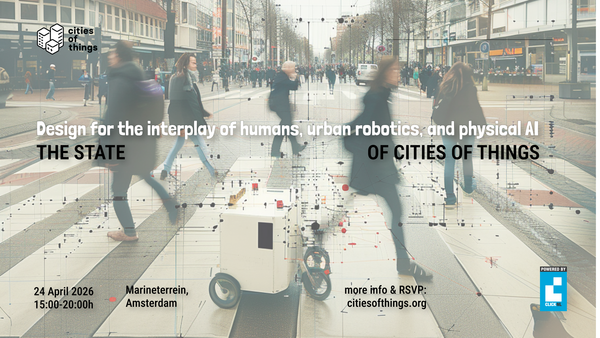
State of Cities of Things: design for the interplay of humans, urban robotics, and physical AI Last November, it was 7 years after the launching paper was presented at NordiCHI, "Near future cities of things: addressing dilemmas through design fiction". It made me think it would be nice
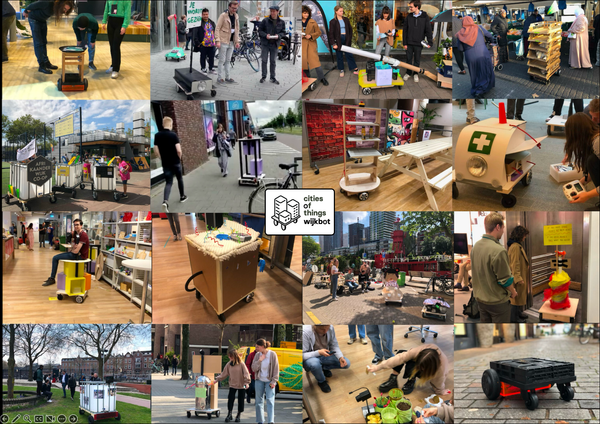
Leuk dat je de Wijkbot bent tegengekomen, of van Wijkbot hebt gehoord. Lees verder om een introductie te krijgen over het ontstaan en het levenspad van Wijkbot. Op deze website vind je vele voorbeelden van wijkbots gemaakt in workshops, in het living lab Cities of Things LAB010, bij studentenprojecten en